We are delighted to announce a €7 million seed round led by LocalGlobe and Daphni, with participation from OVNI Capital as well as notable business angels such as founders of Phagos, Genomines and MistralAI.
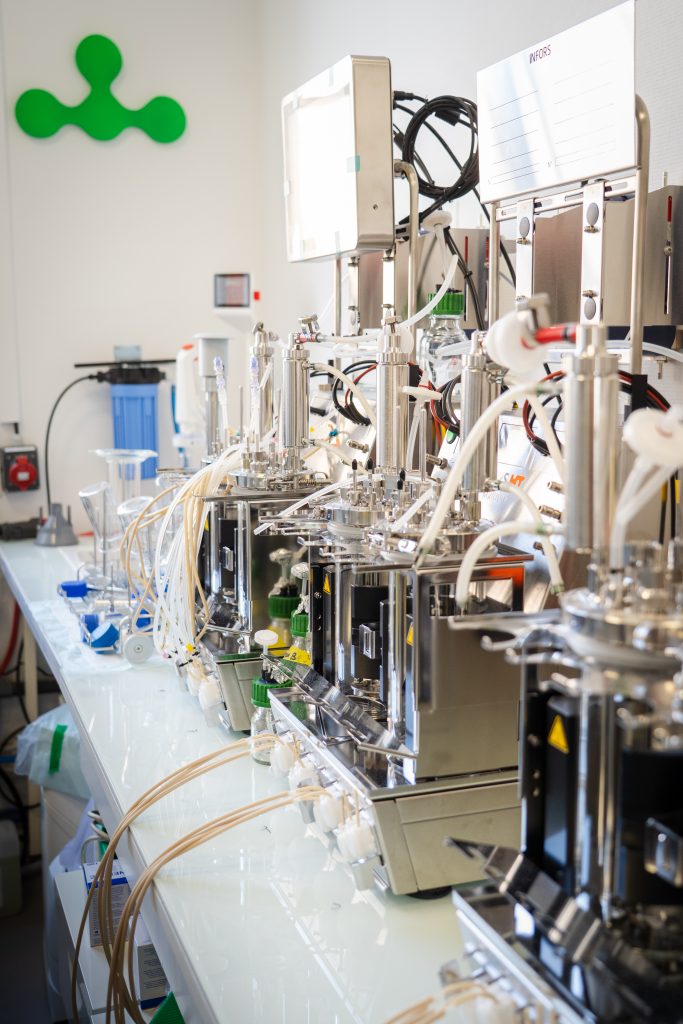
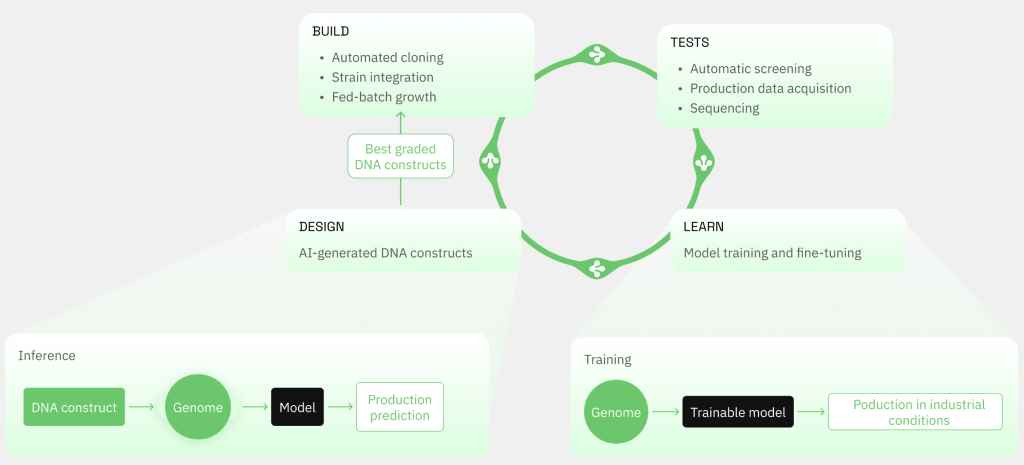
The funding will support the industrial scale-up of our first molecule, astaxanthin, and accelerate the deployment of baCtaForge, our AI-powered bioproduction platform for industrial ingredients, which combines a Precision Biofoundry and a Genome-to-Factory AI model.
Unlocking Nature’s Dark Matter with AI
While the demand for industrial ingredients is skyrocketing, current production methods (extraction from scarce natural sources or petrochemical synthesis) are costly, seasonal, and vulnerable to geopolitical and climate events. Bioproduction offers a comprehensive solution, but developing high-yield industrial strains has historically been a slow and costly trial-and-error process.
baCta changes this paradigm. By leveraging recent breakthroughs in synthetic biology, robotics and generative AI, baCtaForge explores the genomic “dark matter”, long-range interactions and regulatory pathways often ignored by traditional engineering, to design optimized strains with unprecedented speed. The platform uses bio-based reinforcement learning to decrease cost and timelines by an order of magnitude.
We are entering a new era where microorganisms can be used as programmable molecular factories to synthesize organic molecules profitably at commercial scale. This investment allows us to reach industrial scale for our first ingredient, and demonstrate the value of our unique AI-driven approach, proving that we can make the supply of industrial ingredients both resilient and abundant.
Mathieu Nohet, founder and CEO of baCta
First Target: Disrupting the €1B+ Astaxanthin Market
Our first target molecule is astaxanthin, a powerful antioxidant widely used in human health, nutrition, cosmetics, and animal feed. Currently, the market is dominated by synthetic versions derived from petrochemicals or expensive natural extraction from microalgae.

Using our proprietary yeast strain, we can produce an ingredient that serves as a direct drop-in replacement for applications in cosmetics, nutraceuticals, and nutrition. Our goal is to offer the quality of a natural product at the price point of a synthetic, and we aim to achieve positive unit economics in 2026.
Getting to industrial scale in 2027
The seed capital will be used to:
- Scale up the production of astaxanthin: validate industrial processes at the pilot and commercial stage, leveraging a strategic partnership with a french industrial player to access production facilities, and start commercialization
- Expand baCtaForge’s capabilities to other high-value ingredients
baCta represents the convergence of deep biological data and Generative AI, Mathieu and his team have built an engine that doesn’t just promise scientific breakthroughs but delivers industrial viability. We are excited to support them in building a generational company in the bio-economy.
Remus Brett, Partner, LocalGlobe
The transition away from petrochemicals is one of the most critical challenges of our time, baCta’s platform approach offers a scalable, economically viable path to replace dirty supply chains with biological factories. Their vision for 2035 aligns perfectly with our thesis on sustainable industrial transformation.
Pierre-Yves Meerschman, Partner at Daphni
Our mission: unlock sustainable abundance of valuable molecules
We believe it is possible to increase the benefits of industrial civilization while decreasing its downsides linked to extraction and pollution. Bioproduction is the extraordinary tool that will enable this future of sustainable abundance.
Long term, we aim to complete the agricultural revolution initiated 12 000 years ago by achieving total mastery over living microorganisms. Bacteria, yeasts, and other microbes will serve as programmable molecular factories, synthesizing materials, chemicals, and medicines at every scale.
These biological systems will provide clean, sustainable inputs for global agriculture and industry. As production continues to scale, prosperity will vastly increase while pollution and carbon emissions are slashed. Through biology, humanity will finally achieve sustainable abundance.